The Fall of Maduro
Power removed. Stability not guaranteed.
Executive Summary
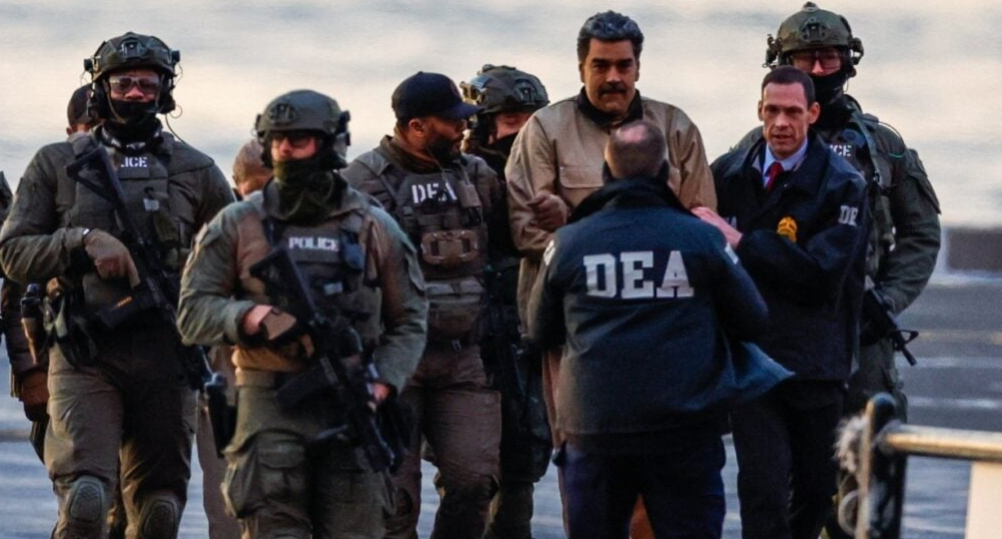
The capture of Venezuelan leader Nicolás Maduro marks a significant disruption to the country’s political order and a major intervention in regional geopolitics. While the removal of a long-standing authoritarian figure creates opportunities for democratic transition, it also introduces serious risks, including institutional collapse, security fragmentation, and prolonged instability.
This event should be understood not as a definitive victory, but as the opening phase of a complex transition process. The long-term outcome will depend on the speed, legitimacy, and effectiveness of post-capture governance efforts.
Background and Strategic Context
For over a decade, Venezuela’s political system was sustained by centralized executive control, military loyalty, and the strategic use of oil revenues. International sanctions, economic deterioration, and declining public legitimacy weakened the regime, but did not dismantle the underlying power structure.
Maduro’s removal disrupts leadership continuity but leaves intact many of the systemic vulnerabilities that contributed to Venezuela’s crisis. Without institutional replacement, the risk of political and security fragmentation remains high.
Immediate Political and Security Effects
Power Vacuum
No single authority currently holds uncontested legitimacy. Competing actors—including military factions, opposition leaders, and regional power brokers—are positioned to influence the transition process.
Security Concerns
Armed non-state groups, intelligence units, and organized criminal networks retain operational capacity. Without coordinated security reform, these actors may exploit the transition period.
Public Sentiment
Domestic acceptance of post-Maduro governance will depend on perceptions of legitimacy, sovereignty, and economic relief rather than on the circumstances of his removal.
Legal and Normative Implications
The extraterritorial capture of a sitting head of state challenges established principles of national sovereignty and non-intervention. While justified by certain states on legal or security grounds, the precedent risks weakening international norms and encouraging similar actions by other global powers.
Regional and Global Implications
United States
The United States gains short-term strategic leverage, particularly in relation to energy markets and diplomatic influence. However, it also assumes indirect responsibility for supporting a stable transition.
Latin America
Regional governments face renewed polarization between sovereignty-based diplomacy and pragmatic alignment with external powers.
Russia and China
Both lose a strategic partner but gain an opportunity to challenge Western influence through diplomatic and economic channels.
Economic Outlook
Venezuela’s economy remains structurally weakened due to:
Degraded oil infrastructure
Currency instability
Institutional corruption
Low investor confidence
Political change alone will not restore economic stability. Sustainable recovery requires legal reforms, transparent governance, and credible regulatory frameworks.
Security Risks
Militia and Paramilitary Activity: Power vacuums increase the risk of localized armed control.
Organized Crime Expansion: Weak enforcement enables smuggling and illicit trade.
Regional Spillover: Refugee movements and border instability may intensify.
Strategic Communication and Public Narrative
Public perception will shape political outcomes.
If the transition is framed as legitimate reform, stability improves.
If framed as foreign domination, resistance increases.
Narrative management is therefore a strategic priority.
Conditions for a Successful Transition
Three core elements will determine long-term stability:
Institutional Reconstruction
New governance structures must replace centralized authority.
Security Sector Reform
Armed forces must be unified under civilian oversight.
Economic Credibility
Immediate improvements in basic services and employment will strengthen public trust.
Policy Recommendations
Transitional Authorities
Establish legal continuity
Protect civil liberties
Organize internationally supervised elections
Security Forces
Maintain unified command
Prevent factionalism
Support civilian leadership
International Partners
Provide humanitarian assistance
Avoid political micromanagement
Support institutional rebuilding
Risk Scenarios
If mismanaged, Venezuela may face:
Prolonged internal conflict
Economic collapse
Political fragmentation
Regional instability
Leadership removal alone does not guarantee reform.
Conclusion
The capture of Nicolás Maduro represents a pivotal moment in Venezuelan history. However, this event should be viewed as the beginning of a transition, not its conclusion.
Sustainable stability will depend on governance reform, security integration, and economic recovery.
History will judge this moment not by the fall of one leader, but by the success—or failure— of what followed.