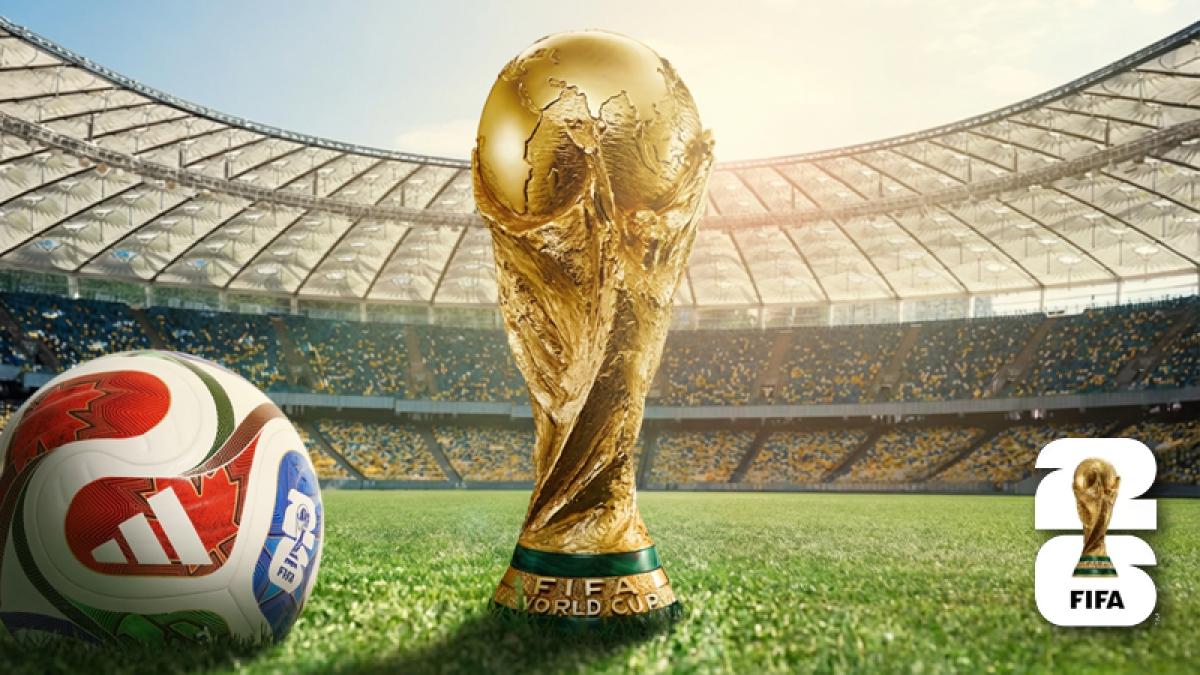
FIFA World Cup 2026: Football’s Biggest Celebration or a Billion-Dollar Business?
As the World’s Most-Watched Sporting Tournament Expands to 48 Teams Across Three Countries, Questions About Money, Politics, Ticket Prices, and the True Spirit of Football Are Becoming Impossible to Ignore.
In June 2026, football’s greatest spectacle returns on an unprecedented scale. The FIFA World Cup, jointly hosted by the United States, Canada, and Mexico, features 48 teams for the first time, expanding a tournament that has historically united billions of fans across borders, cultures, and languages.
On the surface, this is a celebration of football’s global reach. More teams mean more nations, more opportunities for underdogs, and more fans experiencing the biggest stage in the sport.
But behind the stadium lights, sponsorship deals, and global marketing campaigns lies a more complicated question: Has the FIFA World Cup become as much about maximising revenue as it is about celebrating football?
The Business Behind the Beautiful Game
Football is often described as the people’s game. Yet attending a World Cup match can be financially out of reach for ordinary supporters once tickets, accommodation, transport, and other travel expenses are considered.
FIFA operates a commercial model built around broadcasting rights, sponsorships, licensing, and ticketing. These revenues help finance the tournament and support football development, but they also create pressure to maximise commercial returns.
The contradiction is striking. Football's global popularity was built on accessibility: children playing in streets, fans supporting local clubs, and communities gathering around a shared passion. The World Cup risks becoming an increasingly expensive experience for the very supporters who give the sport its cultural value.
The central question is not whether FIFA should earn revenue. It is whether the financial ambitions of football's governing body are being balanced against the interests of ordinary fans.
More Teams, More Opportunities—or More Commercial Expansion?
Expanding the tournament from 32 to 48 teams has a compelling argument behind it: more countries get the chance to compete, and football becomes more representative of the world.
For nations that rarely qualify, this expansion can transform footballing history. It creates opportunities for emerging teams, increases international exposure, and gives new generations a reason to believe their country can reach the global stage.
However, expansion also means more matches, a longer tournament, and greater logistical demands. Critics have raised concerns about player workload, recovery time, and whether a larger competition necessarily produces a better sporting product.
There is a legitimate distinction between making football more inclusive and expanding a tournament primarily because a bigger event creates more commercial inventory.
The test will be whether the additional places deliver meaningful opportunities for developing football nations—or simply help turn the World Cup into a larger global entertainment product.
Three Countries, One Tournament, and a Massive Logistical Challenge
The 2026 tournament spans three host nations and a vast geographic area. That scale offers enormous commercial potential, but it also creates practical challenges.
International travel, accommodation costs, transport between host cities, and the coordination of security and public services will shape the experience for visiting supporters.
For host cities, the tournament promises tourism, global visibility, and economic activity. Yet major sporting events can also impose substantial public costs. The final balance depends on infrastructure spending, local economic conditions, and how much of the generated revenue remains in host communities.
The question every host city should ask is simple: will the World Cup leave a lasting public benefit, or will its most visible gains flow mainly to commercial partners and established stakeholders?
The Players: The Stars Behind the Spectacle
The World Cup sells the drama of footballing greatness: extraordinary goals, national pride, and athletes pushing beyond their limits.
But the modern football calendar is already demanding. Expanding major competitions increases the need for careful workload management, sufficient recovery, and effective injury prevention.
Players are not merely performers in a global entertainment industry. They are workers whose physical limits cannot be ignored indefinitely.
If the commercial growth of football continually increases the demands placed on its athletes, the sport risks undermining the very quality and spectacle it is trying to sell.
A bigger tournament should not automatically mean a heavier burden for the players who make it possible.
Politics Cannot Be Separated From Global Football
The World Cup has never existed entirely outside politics. Hosting rights, international relations, national identity, labour concerns, and debates about human rights have all influenced how major tournaments are perceived.
With three host nations, the 2026 edition presents its own questions about cross-border travel, immigration policies, security, and the treatment of international visitors.
FIFA promotes football as a force for unity. That aspiration matters, but it must be measured against the actual experiences of supporters, workers, and host communities.
Football can bring people together. It cannot, by itself, resolve political disagreements or guarantee equal treatment. The responsibility lies with governing institutions to ensure that the principles they promote are reflected in their decisions.
The Verdict: Who Really Wins the World Cup?
FIFA World Cup 2026 is not inherently a failure because it is commercial. Large-scale tournaments require funding, organisation, infrastructure, and international coordination. Expanding participation can also make the sport more inclusive.
The real issue is whether growth serves football or football serves growth.
If more teams mean greater representation, if host cities receive lasting benefits, if tickets remain accessible to ordinary supporters, and if players receive adequate protection, the expanded tournament could mark a positive evolution.
If commercial priorities dominate, costs rise beyond the reach of fans, and the physical and financial burdens are pushed onto everyone except the most powerful stakeholders, the celebration becomes harder to defend.
The World Cup belongs culturally to the fans, even though its commercial machinery is controlled by powerful institutions.
The ultimate measure of FIFA World Cup 2026 will not be how much money it generates or how many matches it stages. It will be whether the world’s biggest football tournament remains a competition for the people—or becomes a business in which the people are simply the customers.