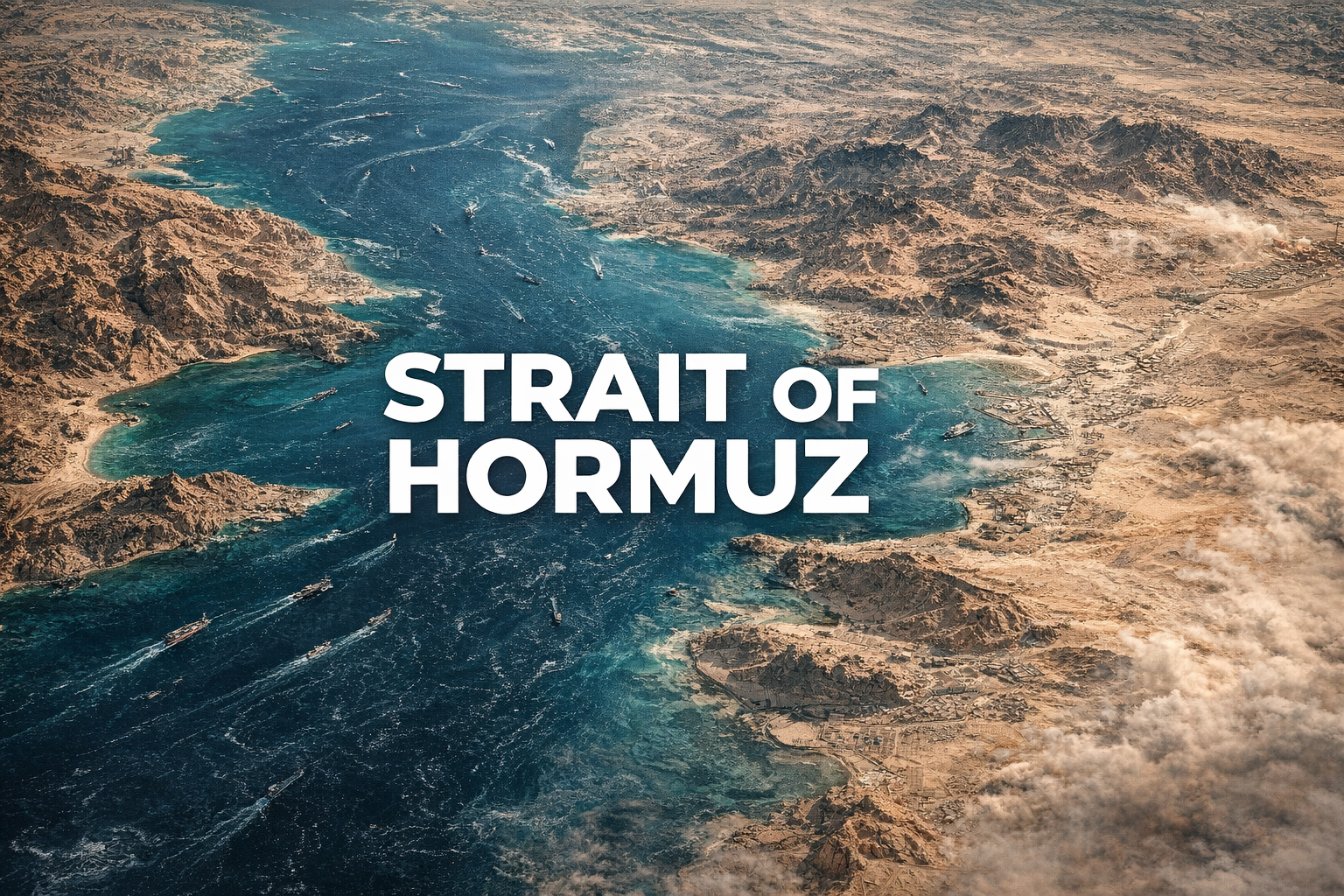
The Strategic Importance of the Strait of Hormuz
How a Narrow Waterway Controls Global Energy Flow and Shapes Modern Geopolitics
The Strait of Hormuz is one of the most critical strategic chokepoints in the world, acting as the primary gateway for energy exports from the Middle East to global markets. Located between Iran and Oman, this narrow maritime corridor connects the Persian Gulf to the open ocean and handles a massive share of global oil and gas transportation. Every day, roughly 20 million barrels of oil about 20% of global consumption pass through this single route, along with a significant portion of the world’s liquefied natural gas (LNG) trade . In terms of maritime trade, nearly one-quarter to one-third of global seaborne oil shipments depend on this passage, making it indispensable to global energy security . Because most Gulf producers such as Saudi Arabia, Iraq, UAE, Kuwait, and Iran rely heavily on this route for exports, any disruption in the Strait immediately affects global oil prices, inflation, and economic stability.
What makes the Strait even more strategically sensitive is its geography. Although it appears wide on a map, actual shipping lanes are extremely narrow, forcing massive oil tankers to pass through tightly controlled corridors. This creates a classic “chokepoint” where even minor disruptions such as military tension, mines, or restricted navigation can significantly slow or halt global energy flows. The world economy is deeply dependent on uninterrupted passage through this route, and there are very limited alternatives to bypass it, which increases its strategic vulnerability.
Iran’s Leverage Through the Strait of Hormuz in the Current Conflict
How Control Over a Global Energy Chokepoint Becomes a Powerful Geopolitical Weapon
Iran’s geographic position gives it direct control over the northern side of the Strait of Hormuz, allowing it to exert influence over one of the world’s most important energy arteries. In the ongoing conflict involving the United States and Israel, Iran is using this position as a strategic tool to gain leverage. By threatening to restrict or control access to the strait, Iran is not just targeting its immediate adversaries—it is applying pressure on the entire global economy.
Recent developments show that Iran has effectively demonstrated its ability to disrupt maritime traffic through the strait, including deploying naval assets, mines, and missile systems to control or limit passage. At times, Iran has required ships to coordinate with its navy or has selectively allowed certain vessels to pass while restricting others, turning the strait into a controlled gateway rather than an open international route . This selective control allows Iran to create economic pressure without fully shutting down the route, which would also harm its own exports.
The impact of these actions is immediate and global. Disruptions in the Strait of Hormuz have already halted a significant portion of maritime oil transport up to 27% of global seaborne oil flows in some cases—causing oil prices to surge above $100 per barrel . Such price increases ripple across the global economy, raising transportation costs, increasing inflation, and slowing economic growth. Even countries not directly involved in the conflict feel the consequences through higher fuel prices and supply chain disruptions.
Iran’s strategy is based on a simple but effective principle: it cannot match the military power of the United States directly, but it can threaten something the global system depends on energy flow. By leveraging the Strait of Hormuz, Iran transforms a regional conflict into a global economic issue. This forces major powers, including Europe and Asian economies heavily dependent on Middle Eastern oil, to take the situation seriously and potentially push for diplomatic solutions.
However, this strategy comes with risks. A full closure of the strait would also damage Iran’s own economy, as a large portion of its oil exports passes through the same route. Therefore, Iran’s approach is typically calibrated—creating uncertainty, raising costs, and demonstrating capability without permanently shutting down the corridor.
Conclusion
The Strait of Hormuz is not just a geographic feature; it is a central pillar of the global energy system. Its importance lies in the sheer volume of oil and gas that passes through it and the lack of viable alternatives. In times of conflict, control over this narrow passage becomes a powerful strategic tool. Iran’s ability to influence or disrupt this route gives it disproportionate leverage in its confrontation with the United States and Israel, turning a regional war into a global economic concern. As long as the world remains heavily dependent on oil, the Strait of Hormuz will continue to be one of the most critical and contested points in global geopolitics.