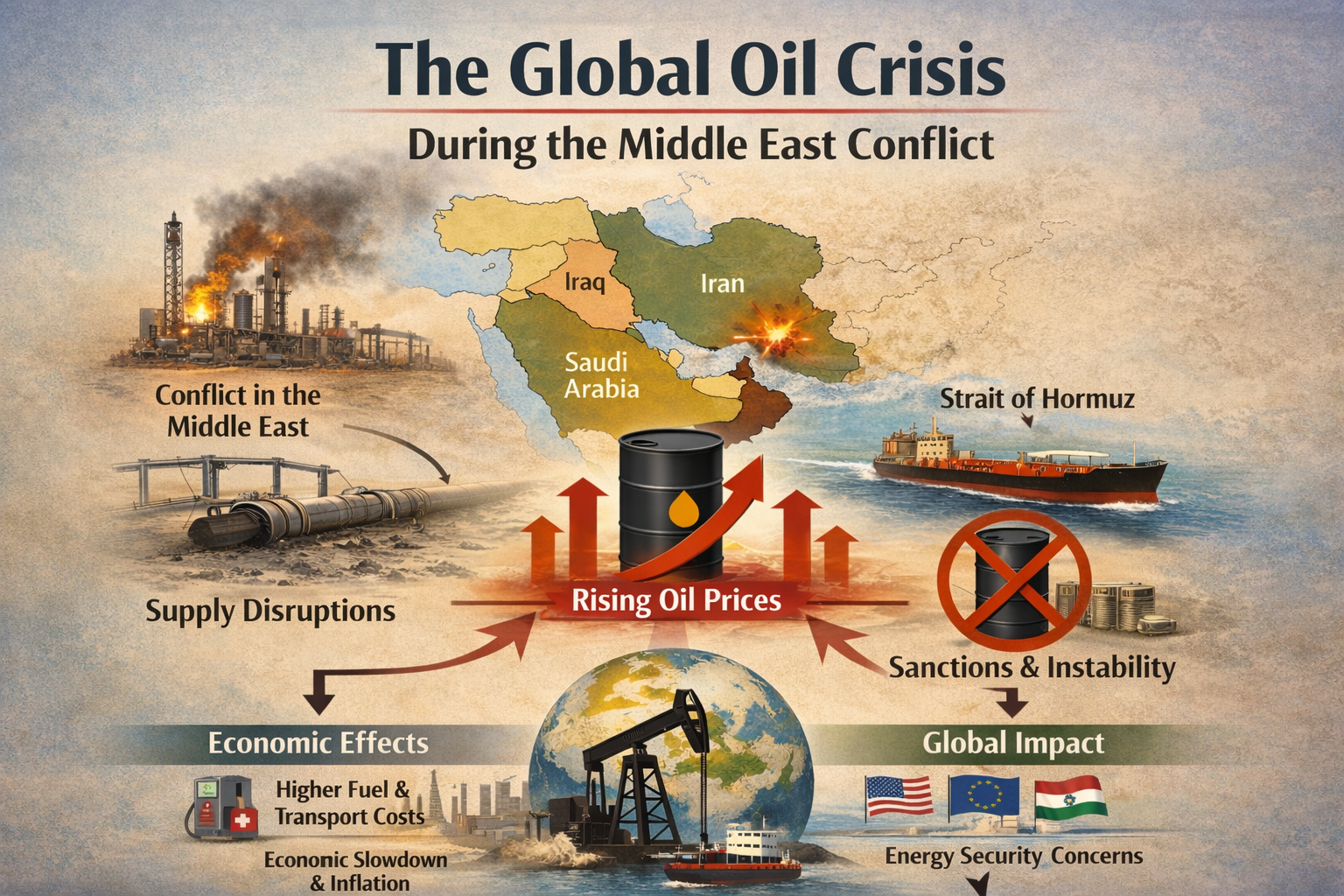
The Global Oil Crisis During the Middle East Conflict
How Wars in the Middle East Disrupt Global Energy Supply and Impact the World Economy
The global oil crisis is often closely connected to conflicts in the Middle East because the region holds some of the largest oil reserves in the world. Countries such as Saudi Arabia, Iran, Iraq, Kuwait, and the United Arab Emirates produce a significant portion of the world’s crude oil. When wars or political tensions occur in this region, oil production, transportation, and supply chains can be disrupted, creating instability in global energy markets. As a result, conflicts in the Middle East frequently trigger global oil crises that affect economies worldwide.
When a war breaks out in the Middle East, several factors contribute to oil market instability. Oil fields, refineries, and pipelines may become targets or suffer damage during military operations, reducing production capacity. At the same time, shipping routes that transport oil to international markets, especially strategic passages such as the Strait of Hormuz, may become unsafe or restricted. Since a large percentage of the world’s oil exports pass through these routes, any threat to their security can immediately push oil prices higher due to fears of supply shortages.
Another important factor is the reaction of oil-producing countries and international organizations. During times of conflict, oil-producing nations may reduce production for security reasons or as part of strategic political decisions. Some countries may also face international sanctions that limit their ability to export oil. These developments further tighten global supply and contribute to price increases. Because oil is traded globally, even a small reduction in supply can cause significant price volatility.
The rise in oil prices during Middle East conflicts has major economic consequences for countries around the world. Higher oil prices increase transportation and manufacturing costs, which often lead to higher prices for goods and services. This can cause inflation, slow economic growth, and place pressure on governments that depend heavily on imported fuel. Developing countries are particularly vulnerable because energy costs form a large portion of their national expenditure.
Global oil crises linked to Middle East wars also influence international politics and strategic decisions. Many countries strengthen their diplomatic relations with oil-producing states in order to secure stable energy supplies. Others invest in strategic petroleum reserves so that they have emergency oil supplies during periods of disruption. Additionally, conflicts in oil-producing regions often encourage countries to diversify their energy sources and invest more heavily in renewable energy technologies.
The impact of these crises extends beyond economics. They can reshape global power dynamics, as energy-exporting nations gain greater geopolitical influence during periods of high prices. At the same time, major energy-importing countries may accelerate policies aimed at reducing dependence on oil, including promoting electric vehicles, improving energy efficiency, and expanding renewable energy infrastructure.
In conclusion, wars in the Middle East have a direct and powerful impact on the global oil market because of the region’s central role in oil production and export. When conflicts disrupt production or threaten key transportation routes, oil prices rise and economies across the world feel the consequences. These crises highlight the importance of energy security and the need for countries to develop more diverse and resilient energy systems to reduce vulnerability to geopolitical conflicts.