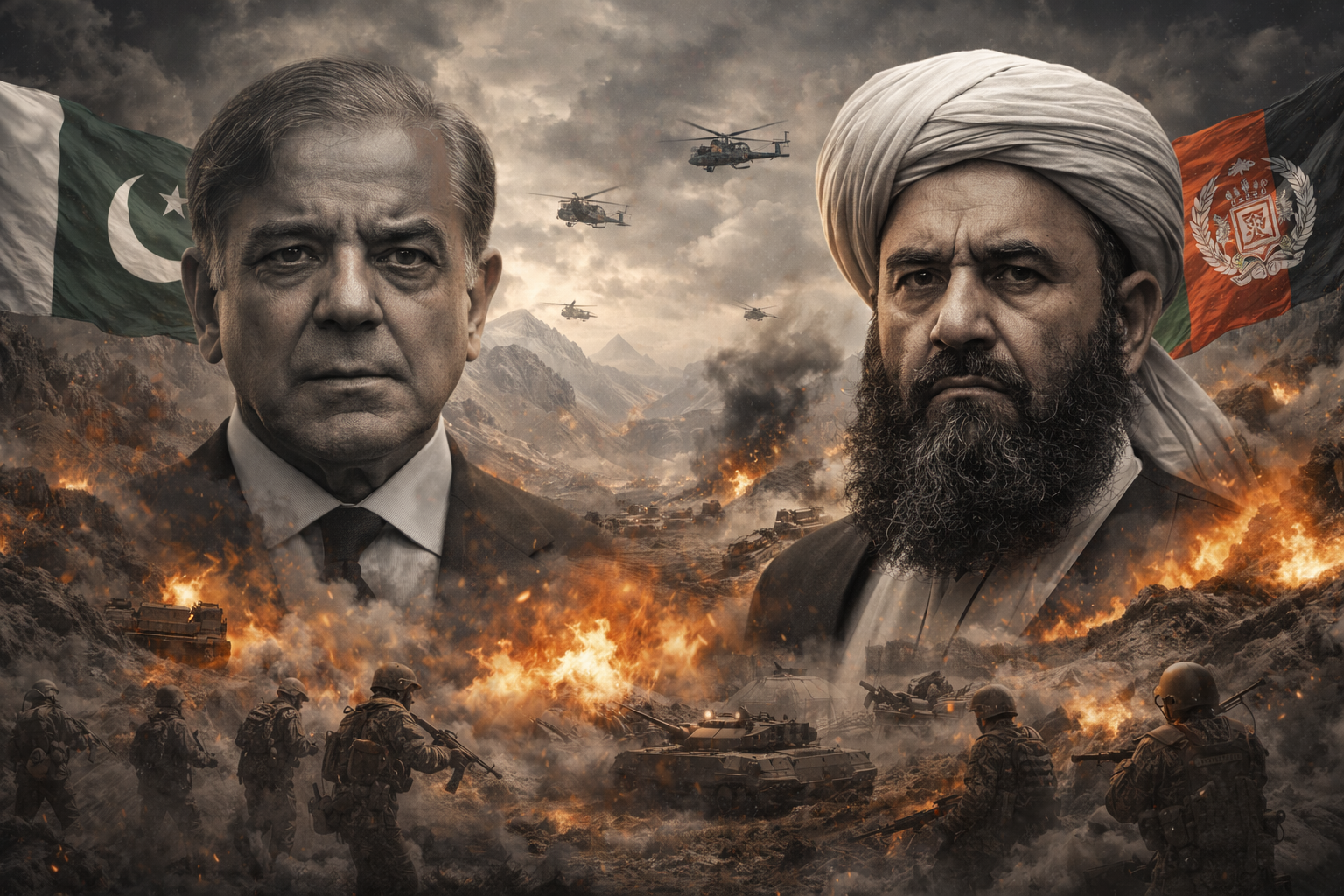
Fault Lines on the Frontier: The Strategic Anatomy of a Pakistan Afghanistan Conflict
How border tensions, militant sanctuaries, and regional rivalries could transform localized clashes into a destabilizing cross-border war.
A full-scale war between Pakistan and Afghanistan would not emerge from conventional territorial ambition but from accumulated mistrust along the Durand Line, cross-border militancy, and competing security doctrines. The primary trigger would likely be intensified strikes by Pakistan against Tehrik-e-Taliban Pakistan (TTP) elements allegedly operating from Afghan soil, followed by retaliatory border mobilization by Afghan forces. Pakistan’s doctrine prioritizes preemptive counterterror operations to prevent internal destabilization, while Afghanistan’s leadership—particularly under Taliban governance—frames cross-border incursions as violations of sovereignty. What begins as targeted artillery exchanges and airstrikes could rapidly escalate into sustained border engagements, drone warfare, and localized ground clashes in Khyber Pakhtunkhwa and eastern Afghan provinces.
Strategically, Pakistan holds conventional military superiority in airpower, artillery, and organized formations. However, Afghanistan’s advantage lies in terrain familiarity, irregular warfare adaptability, and ideological mobilization. The conflict would likely remain geographically concentrated but operationally intense, with both sides avoiding deep territorial invasion due to logistical and political costs. The greater danger would be spillover: militant groups exploiting chaos, refugee flows increasing humanitarian strain, and internal insurgencies gaining momentum. China, as a strategic partner of Pakistan, would push for stabilization to protect economic corridors, while regional actors such as Iran and Central Asian states would prioritize border containment. The United States, though no longer militarily present, would monitor counterterror implications closely.
Economically, prolonged confrontation would strain Pakistan’s already fragile fiscal position and further isolate Afghanistan’s sanction-hit economy. Trade routes through Torkham and Chaman would face disruption, affecting supply chains across South and Central Asia. The deeper risk is structural destabilization rather than decisive military victory. Neither state benefits from sustained conflict, yet domestic political pressure, nationalist narratives, and unresolved border legitimacy issues create escalation potential. Ultimately, a Pakistan–Afghanistan war would be less about territorial conquest and more about security control, state authority, and the unresolved legacy of a colonial boundary that continues to shape modern conflict dynamics.